

Overview:
In mining operations, real-time monitoring of vehicles, equipment, and site conditions is critical for safety, efficiency, and asset management. However, remote mining sites often lack stable wired connectivity, making cellular networks the backbone of communication.
Challenge:
Harsh Environments: Dust, vibration, and extreme temperatures challenge network reliability.
Remote Locations: Weak or intermittent cellular coverage in deep pits or underground mines.
Mission-Critical Data: Delays in video feeds or vehicle health data (VHMS) can impact safety decisions.
Safety Compliance: Real-time monitoring is mandatory for accident prevention
Solution:
Our 4G Industrial Router establishes an Ethernet-over-IP (EoIP) tunnel between mining vehicles/offices and the central monitoring hub, enabling:
Dual-SIM Failover: Automatic carrier switching ensures uninterrupted connectivity.
Always-On EoIP Tunnel: Persistent layer-2 bridge for real-time camera/VHMS data.
Industrial Durability: Ruggedized design withstands mining conditions.
High-Bandwidth Support: Simultaneously transmits HD video and VHMS data streams

Key Benefits:
✔ Always-Connected Operations - Sim failover prevents data loss during network malfunctions.
✔ Predictive Maintenance - Real-time VHMS data reduces equipment downtime by 30-40%
✔ Plug-and-Play Deployment – Pre-configured EoIP tunnels simplify rollout.
✔ Centralized Visibility – Monitor all vehicles and sites from a single dashboard.
✔ Enhanced Safety - Live camera feeds enable immediate incident response
Implementation:
1. Edge Layer:
Routers installed in offices and mining vehicles.
Connects to IP cameras and VHMS via Ethernet.
2. Transport Layer:
EoIP tunnels over 4G.
Dual-SIM auto-failover
3. Control Center:
Unified view of all sites/vehicles.
Alerts for equipment anomalies or connectivity issues.
Why It’s Ideal for Power Utilities:
Carrier-Agnostic: Works with any local 4G provider globally.
Deterministic Performance: QoS prioritizes video/VHMS traffic.
Low TCO: Eliminates need for expensive satellite links.
Turn Your Mine Into a Connected Worksite – Without Compromises.
With our Cellular Industrial Routers, mining operations gain uninterrupted intelligence—ensuring real-time visibility, proactive maintenance, and enhanced safety across your entire site. Stay connected, stay in control, and drive efficiency with always-on, always-reliable industrial connectivity.

Intelligent Data Analytics Platform

Cloud Security Protection System

Integrated Customer Management Solution

Integrated Customer Management Solution
Related products

WR143
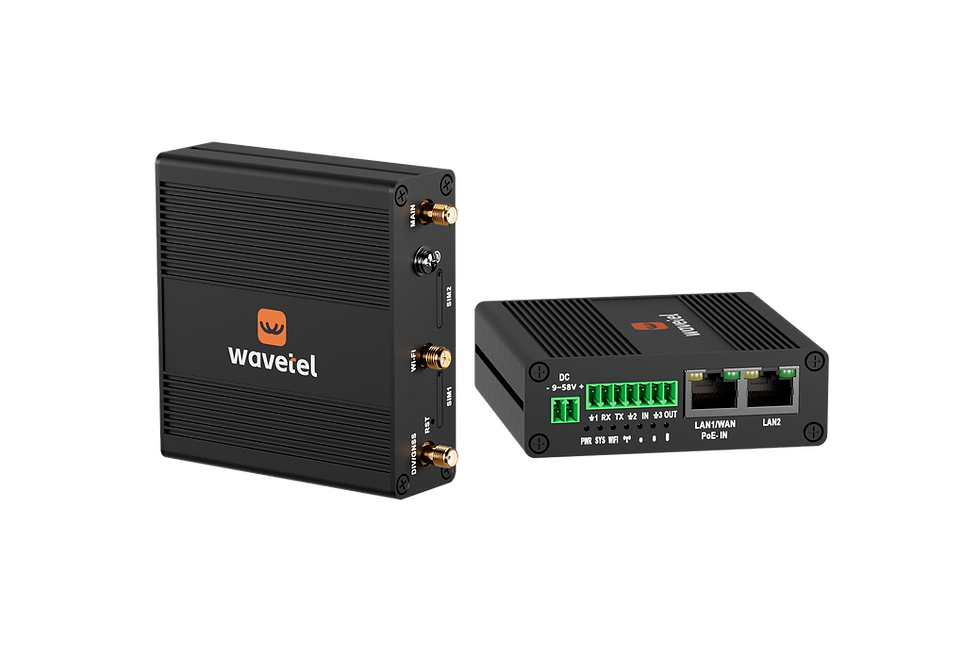
WR153

WR245
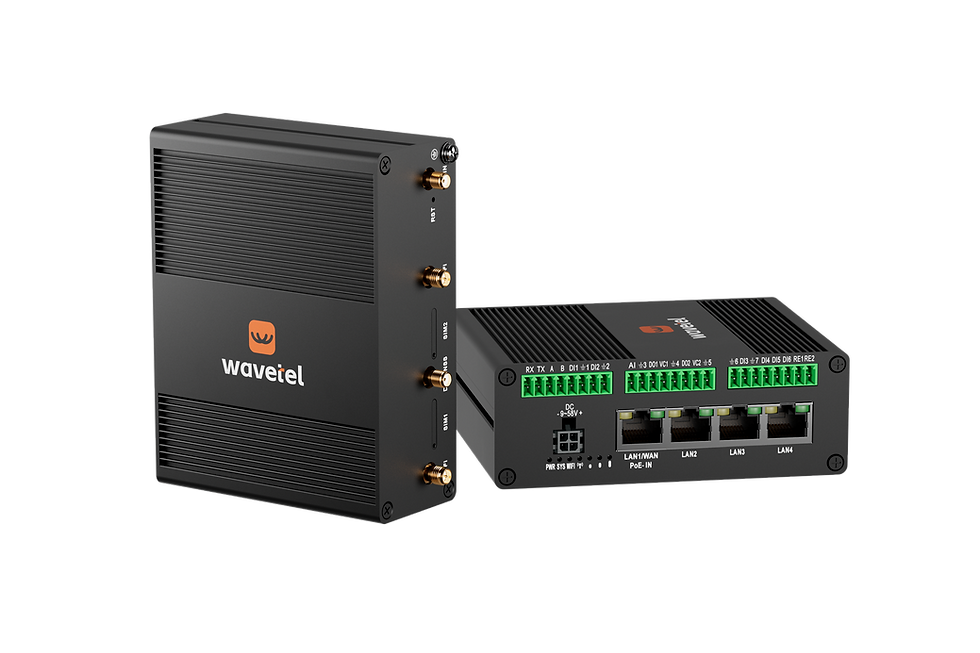
WR255
Related accessories

Sim Eject Pin

Ethernet Cable

Wi-Fi SMA Antenna

GNSS SMA Antenna

Cellular SMA Magnetic Antenna

Cellular SMA Antenna

EU Type Power Adapter 12V/1A

3.5mm 1*7 Terminal Block

3.5mm 1*2 Terminal Block

Female DB9 Connector with Wires

L Type Mounting Bracket

DIN Rail Mounting Bracket
FAQ
Why does the mining network use an EoIP tunnel?
The case uses Ethernet-over-IP to bridge the vehicle or site Ethernet network to the central monitoring network. Cameras and vehicle health monitoring equipment connect locally by Ethernet, while the tunnel carries their traffic across the cellular link.
Does the EoIP tunnel itself encrypt camera and vehicle data?
No. An Ethernet tunnel and an encrypted VPN serve different purposes. If the deployment requires encrypted transport, use a compatible VPN configuration in addition to the Ethernet tunnel and verify both endpoints and routes.
What happens to monitoring when the truck loses mobile coverage?
A second SIM can restore connectivity where its operator has coverage. If both networks are unavailable, live reporting stops. Retaining readings or video during that interval requires buffering in the application, recorder or field equipment.